


History
More than a thousand years of Tuscan heritage.
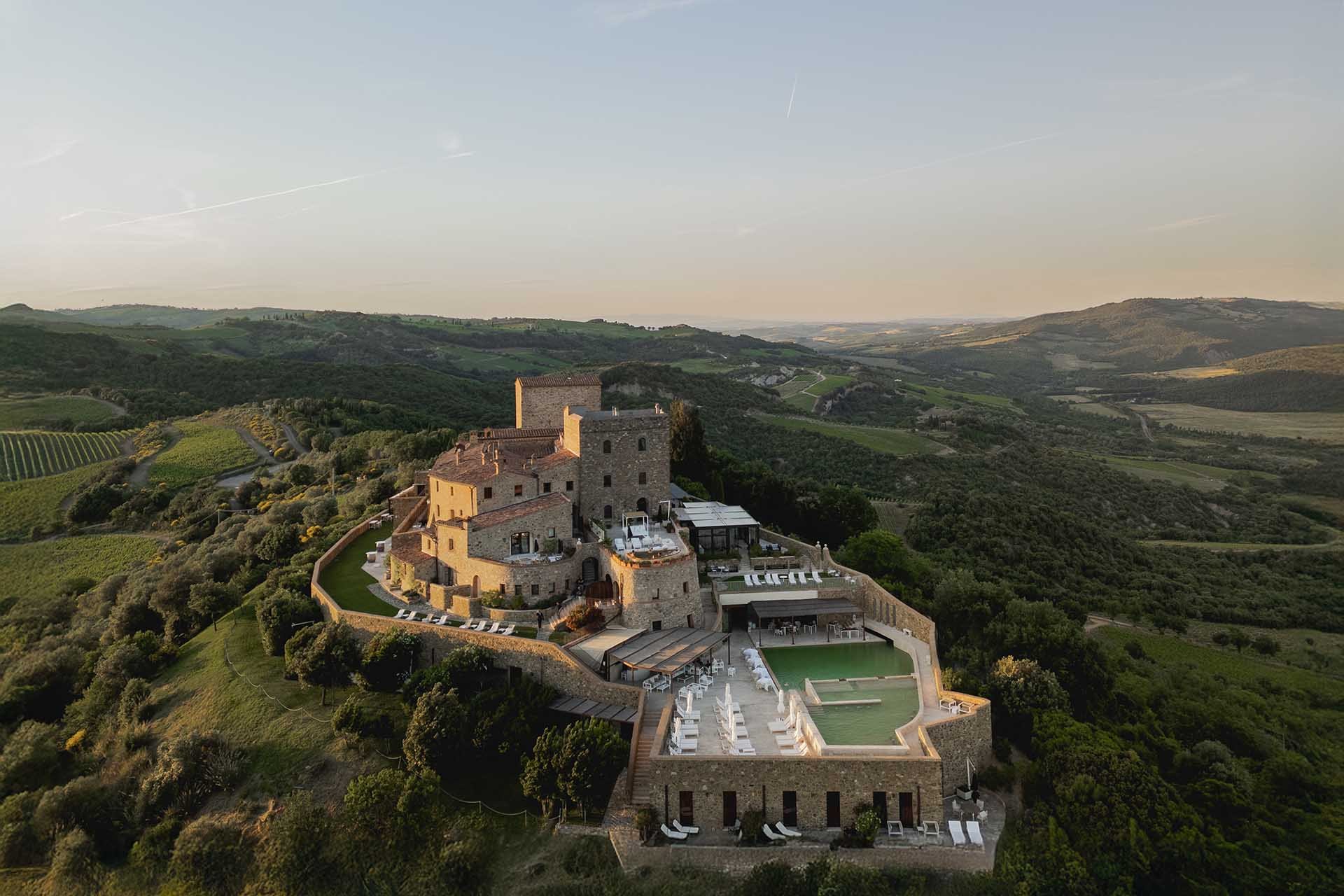
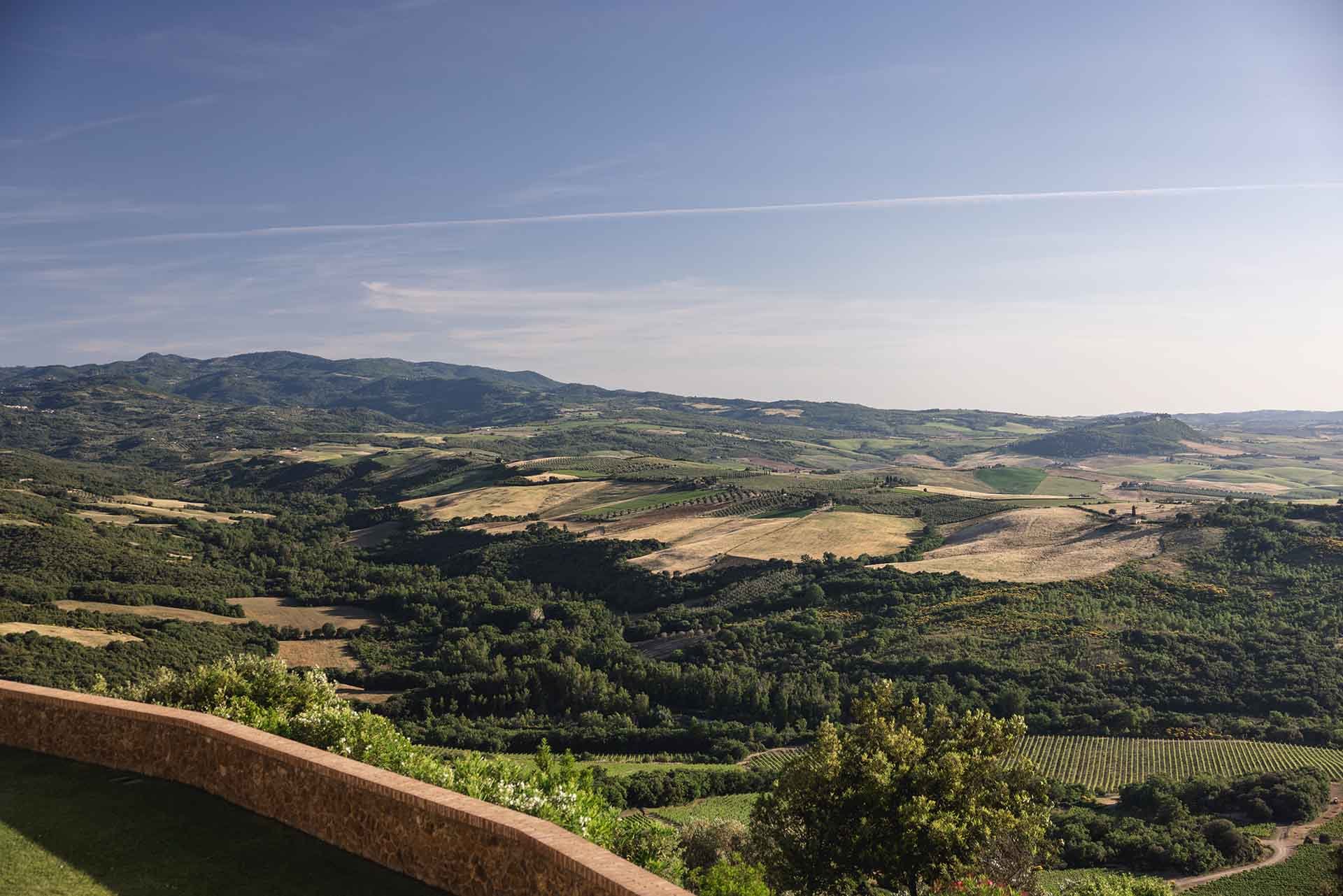
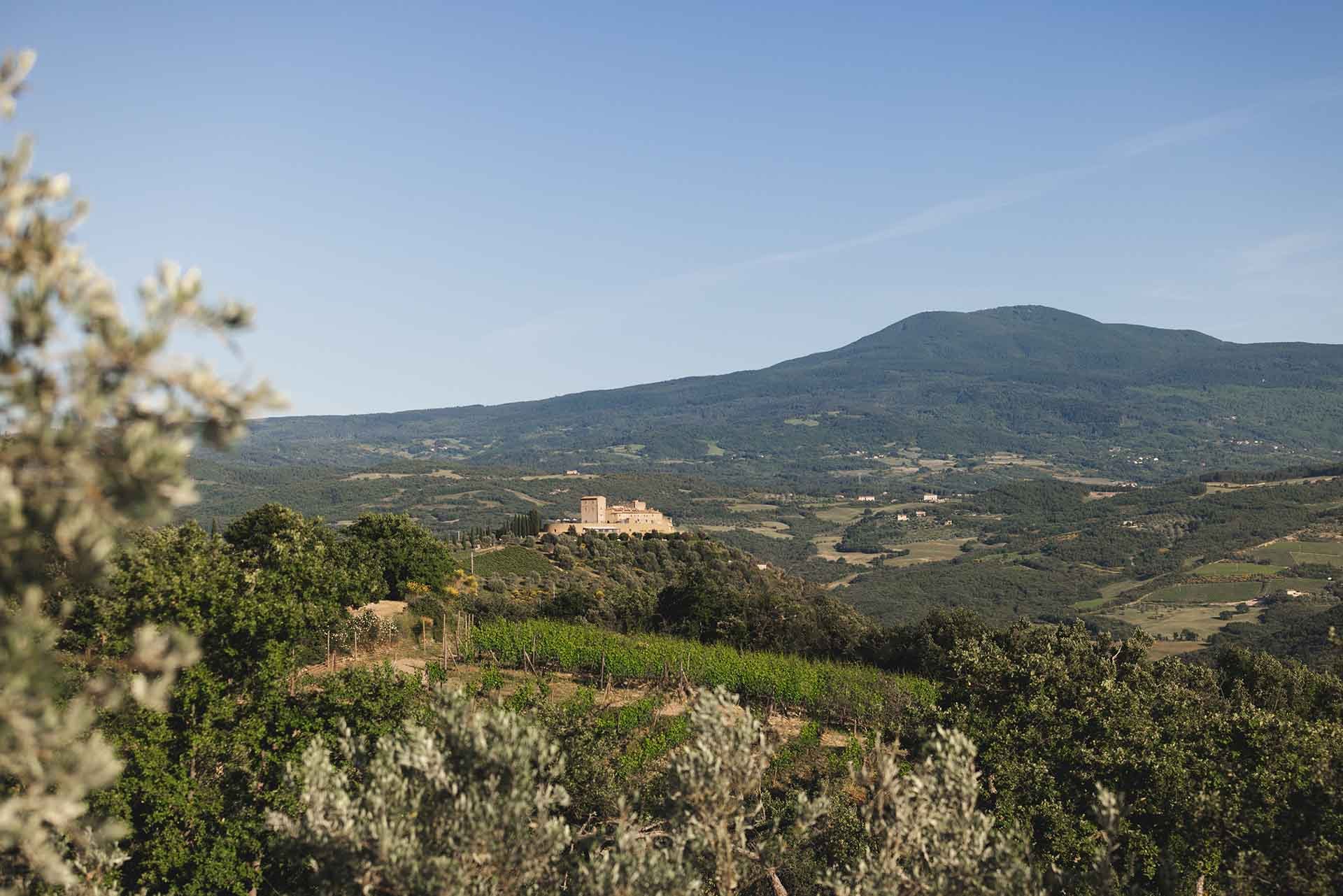
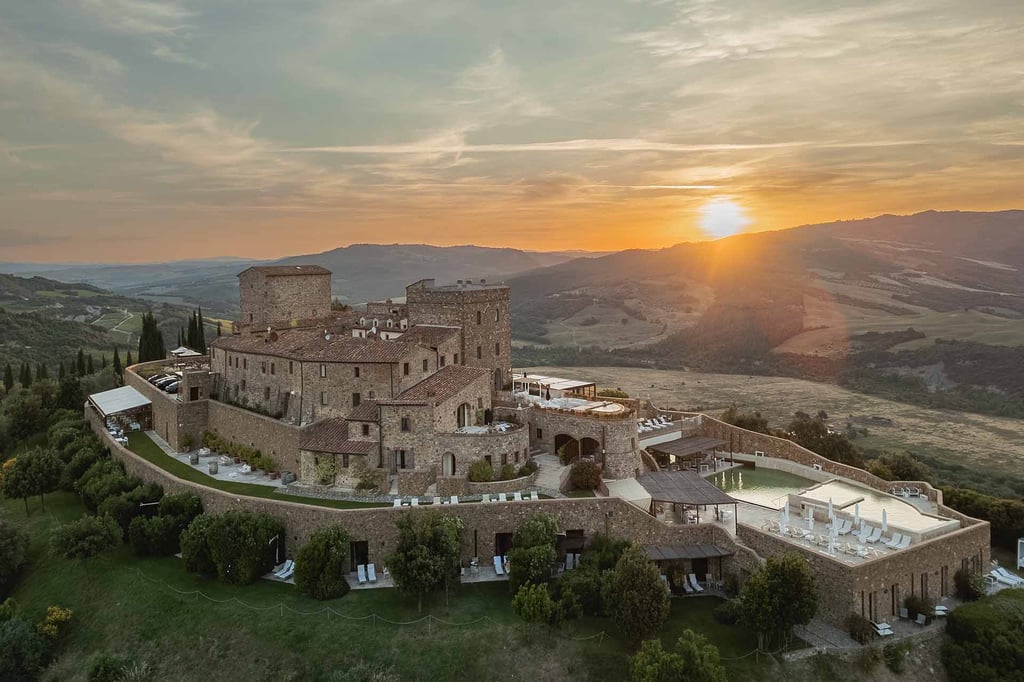
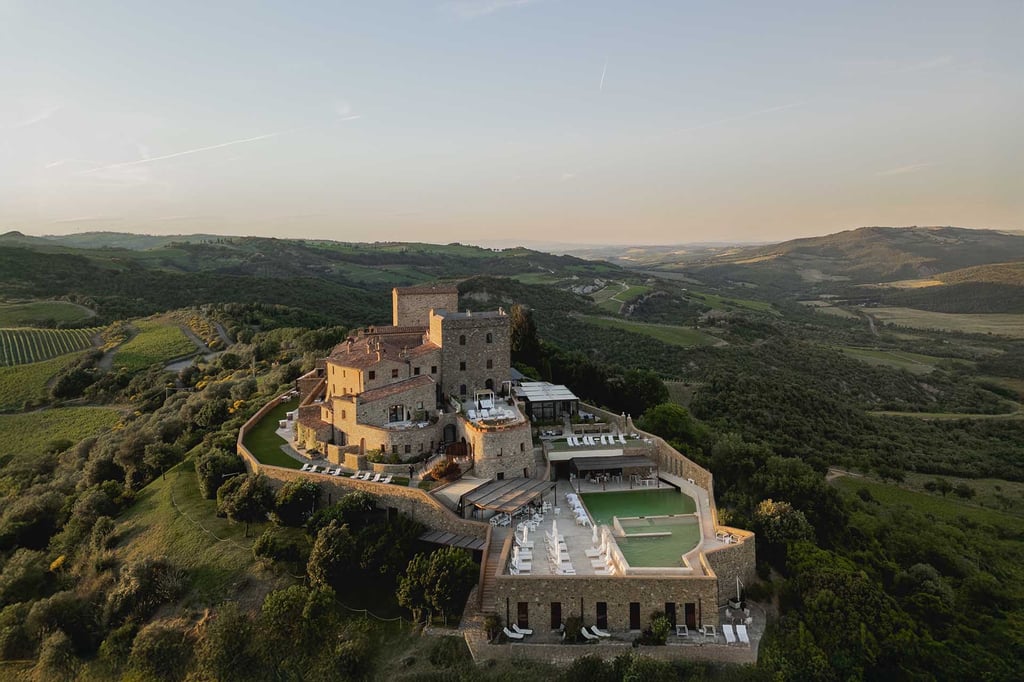
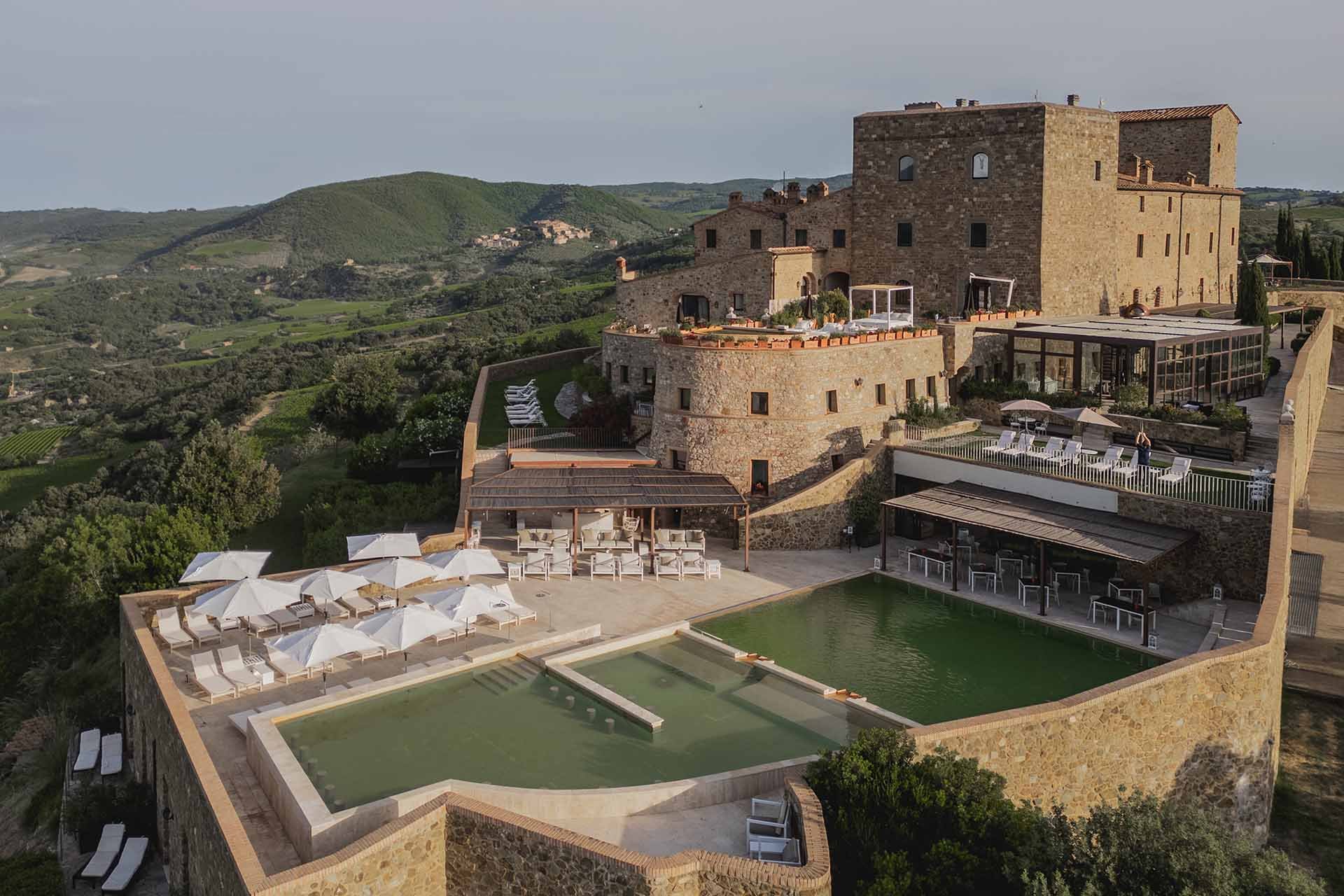
Overlooking the valley crossed by the ancient Via Clodia, which connected southern Etruria to Rome, Castello di Velona was built as a military fortress between the 11th and 12th centuries, in a strategic position at the top of the hill. From its origins it had a singular nature: not a fief with a lord, but a Consortium of Arts and Crafts, governed by the master artisans who lived and worked within its walls.
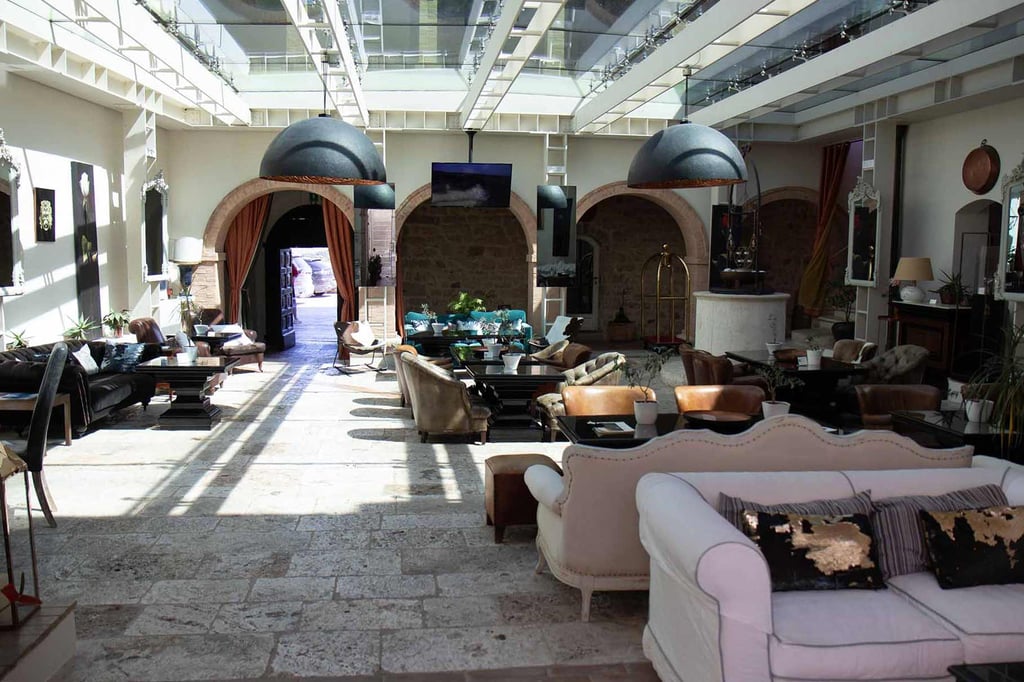
Expanded in the 12th century, during the rise of the Aldobrandeschi counts in Val d'Orcia, the Castle preserves from that era its Watch Tower, a memory of the ancient rivalry between Siena and Florence. In the 15th century it passed to the Medici, who made it a noble residence; the main Loggia dates to the Renaissance, and "Velona" even appears in the geographical maps frescoed in the Vatican by cosmographer Ignazio Danti. The Cervini family followed in the 18th century and, at the end of the 19th, Count Martelli, whose insignia can still be read on the central tower.
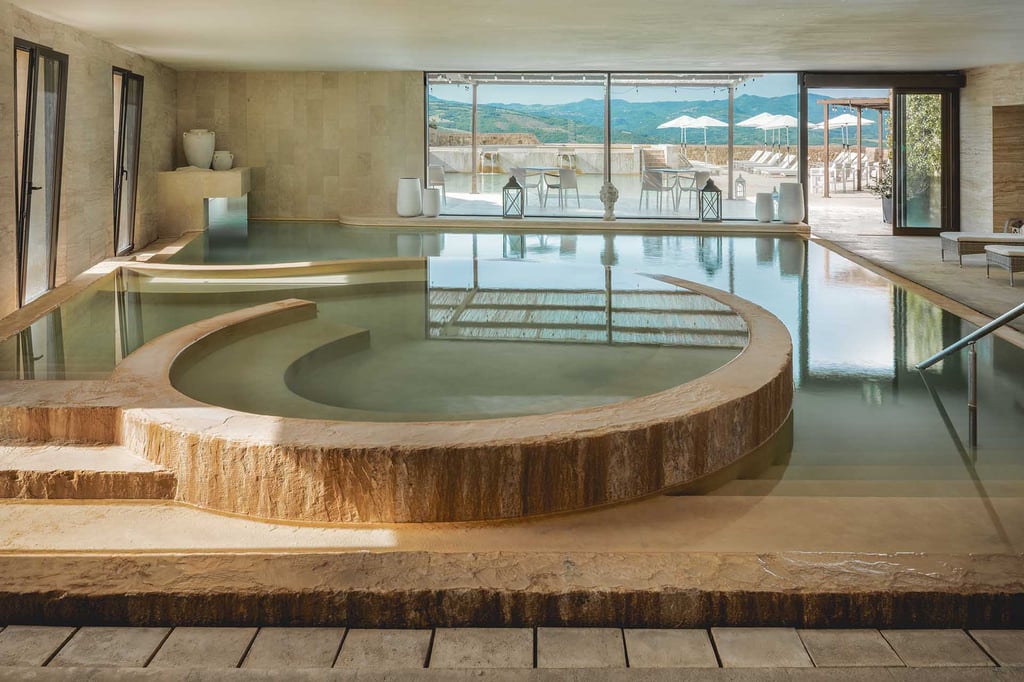
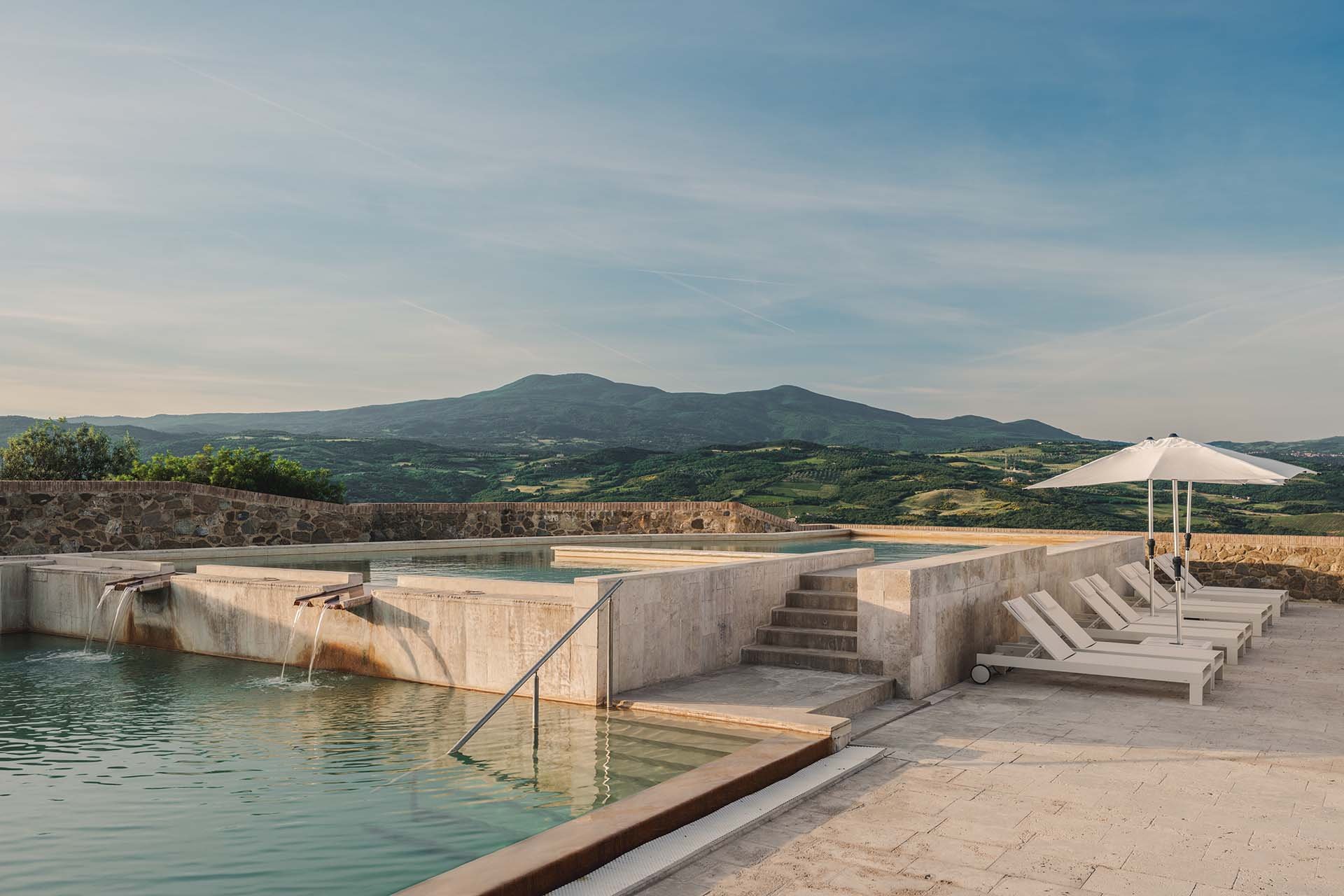
After a century of silence, in 1997 the Piermartini family brought the Castle back to life, restoring it from ruin to dimora. And among the vines came the discovery that changed everything: a natural thermal spring, which turned the fortress into a thermal castle.