

What Thermal Water Does for the Body: The Benefits of Our 36°C Spring
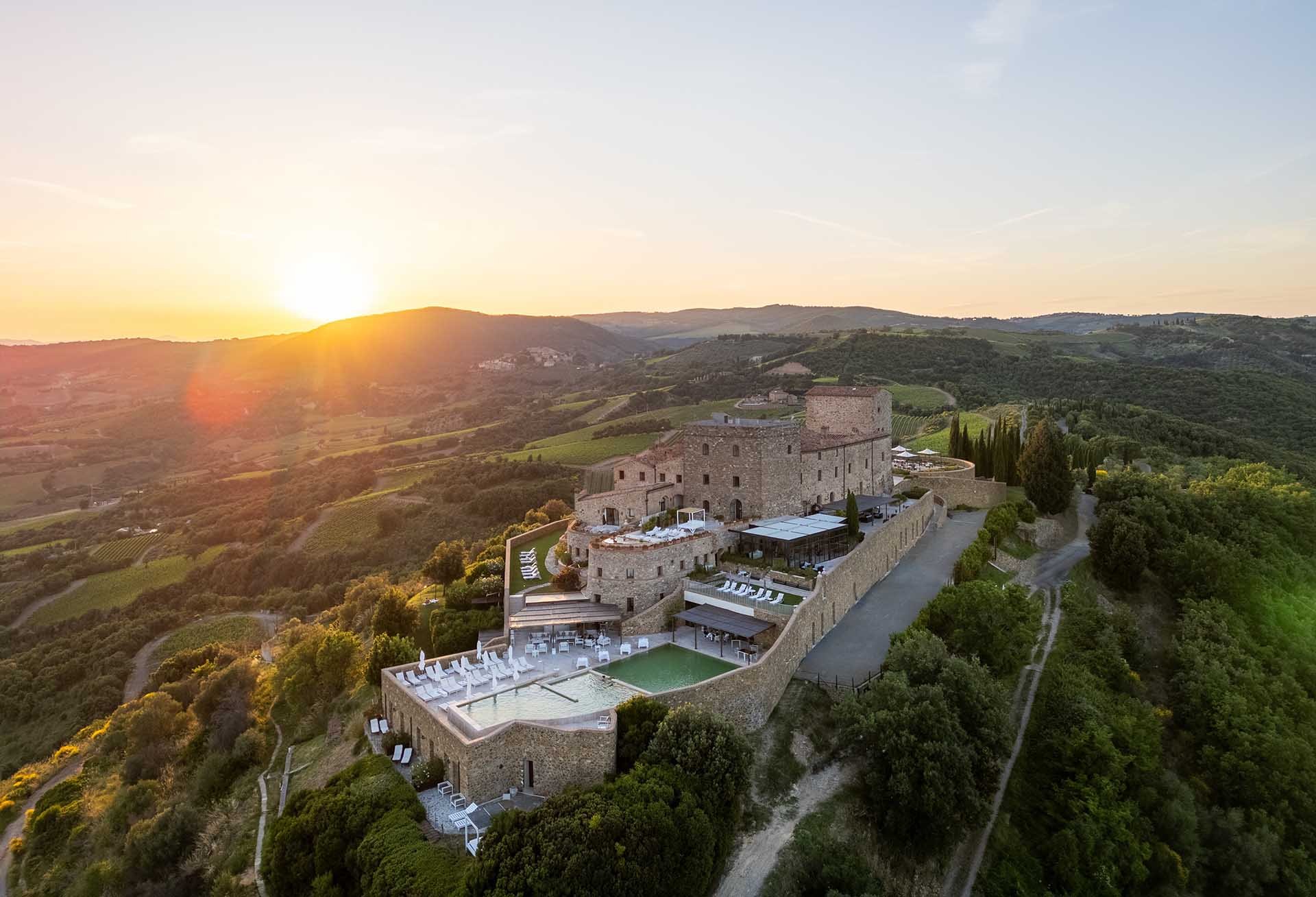
Beneath the vineyards of Castello di Velona – Terme di Montalcino, a volcanic spring rises at 36°C. What it carries, what it does, and how to enjoy it.
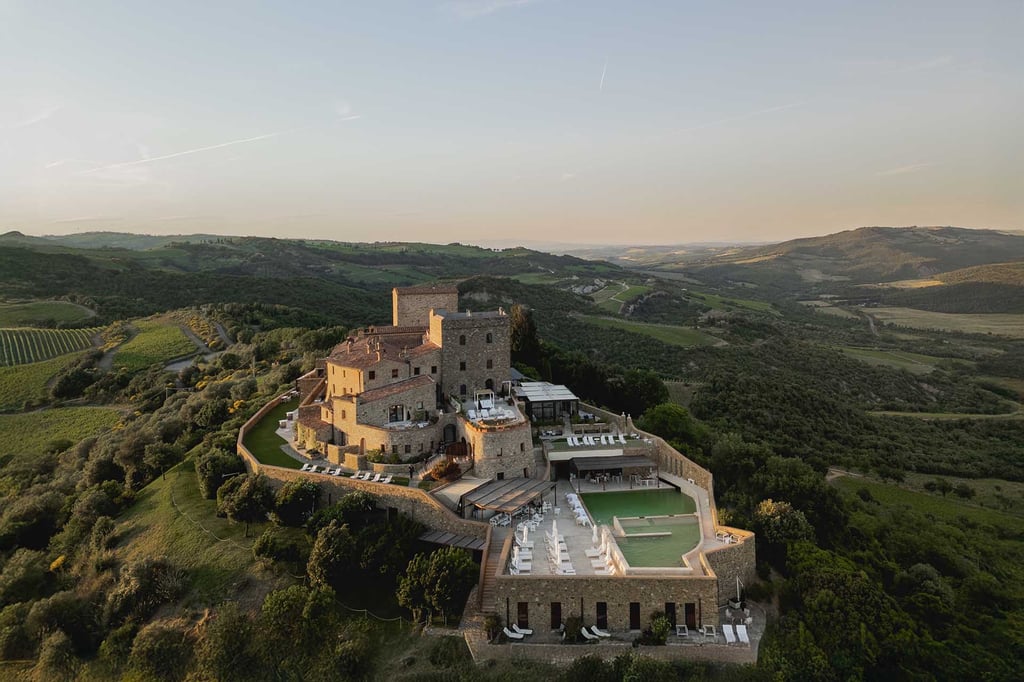
Some places are built near water. Castello di Velona was built on it.
A spring warmed by Monte Amiata
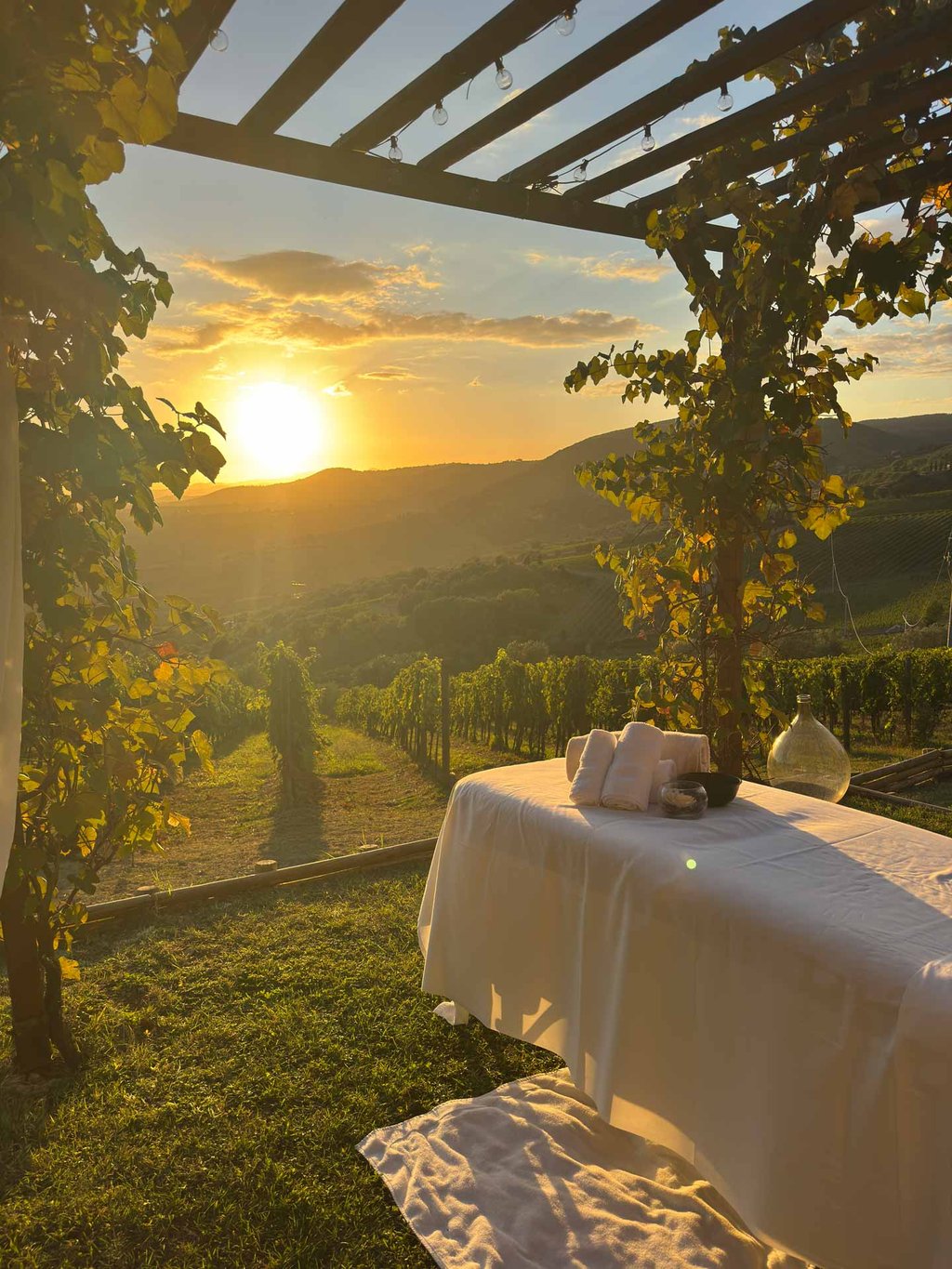
Deep beneath the estate, water warmed by the volcanic heat of Monte Amiata, the extinct volcano that closes the southern horizon of the Val d’Orcia, travels slowly through the rock, gathering minerals along the way. It surfaces among the Castle’s vineyards at 36°C.
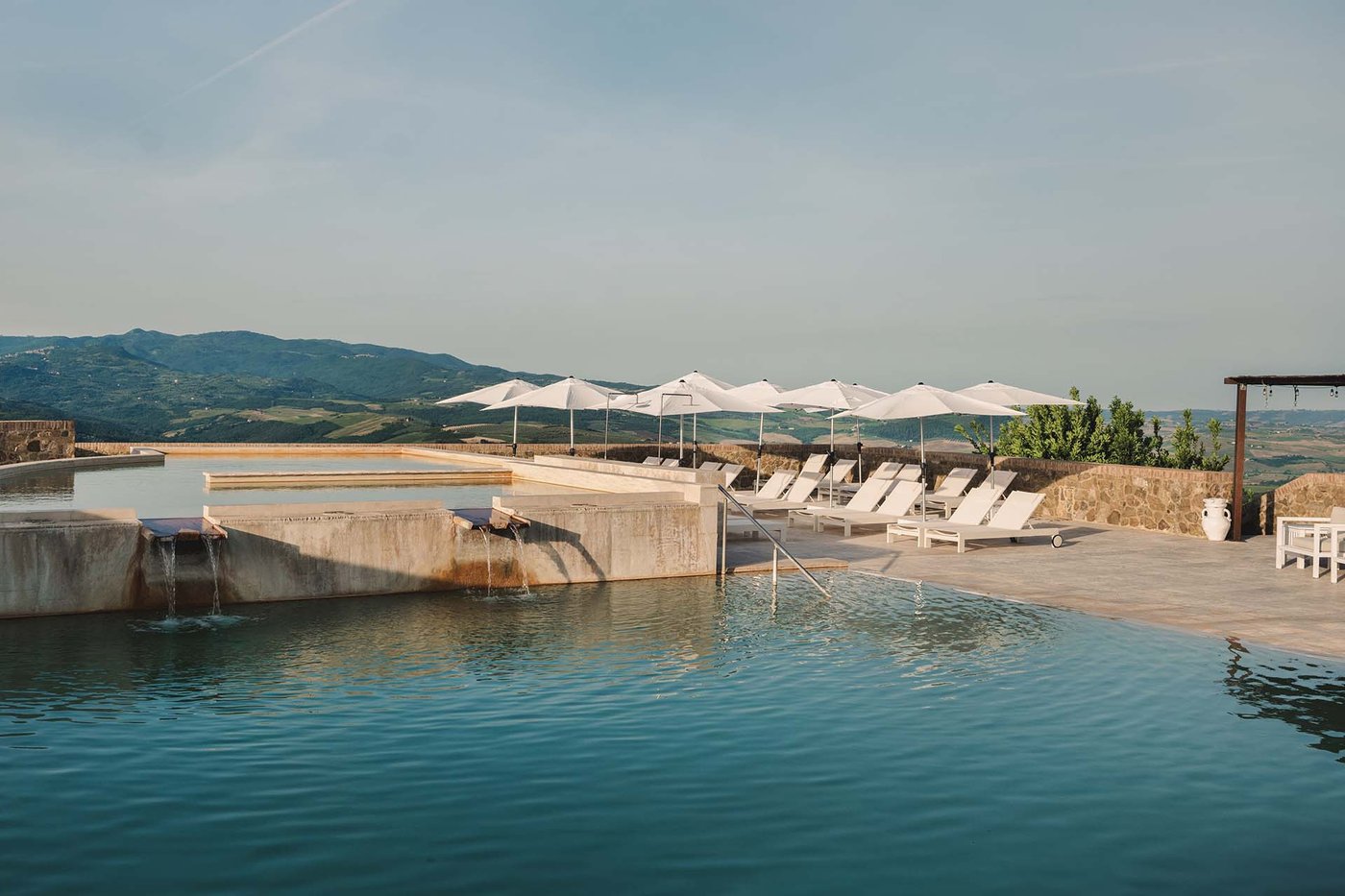
Nobody heats it. The warmth that fills the OLISPA pools comes from the land itself: the same water, at the same temperature, in every season.
What the water carries
Our thermal water is rich in dissolved minerals, among them calcium, magnesium and zinc. Each plays its part in how the body responds to a bath.
Magnesium is the most studied for the skin. In a controlled study at the University of Kiel, bathing in magnesium-rich water improved the skin’s barrier function and hydration, and reduced roughness and redness in people with dry skin.
Calcium takes part in the skin’s natural renewal, while zinc has long been valued in dermatology for its soothing qualities.
What guests notice is simpler: after a few days, the skin feels softer.
Warmth, water and circulation
At 36°C the water sits just below body temperature. It is warm enough to loosen tense muscles, and gentle enough to let you stay in for a long time without the fatigue that very hot baths can bring.
Warmth opens the blood vessels. The pressure of the water around the body supports the return of blood to the heart. Buoyancy takes weight off the joints. It is no coincidence that balneotherapy has been used for centuries for stiff backs and tired joints, and that research continues to study it for musculoskeletal pain.
The breath changes too. Between the steam rooms, the panoramic sauna and the hillside air, it slows and lengthens almost on its own.
A quieter mind, a deeper sleep
The most immediate effect of a thermal bath is one you feel rather than measure. Yet science measures it too.
A systematic review by researchers at the University of Parma, covering fifteen studies, found that balneotherapy and spa therapy can influence levels of cortisol, the stress hormone, pointing to a role in how we cope with stress.
Sleep follows. A review from the University of Milan analysed twenty-one studies on balneotherapy: sixteen reported an improvement in how well people felt they slept. Part of the explanation may lie in thermoregulation. Warming the body, then letting it cool, is one of the natural signals that prepares us for rest.
At Castello di Velona the thermal pools stay open to guests around the clock, so the night can begin where the day ended: in the water, under the stars.
The ritual: how to bathe
Thermal water works through repetition, not intensity.
Alternate. Short immersions, then rest on a lounger with a herbal tea, then back into the water.
Hydrate. Warm water draws fluids from the body without you noticing. Flavoured water, herbal teas and fresh fruit are always waiting in the relaxation area.
Play with contrast. Move between the thermal pools, the sauna, the steam rooms and the ice fountain, and always come back to the warmth.
Give it time. The benefits build over several days, which is why we suggest staying at least three nights.
Ask. OLISPA’s Medical Director offers thermal consultations to shape a personal programme. If you are pregnant, or have a heart or other medical condition, speak with your doctor before bathing.
OLISPA: where the spring meets the Val d’Orcia
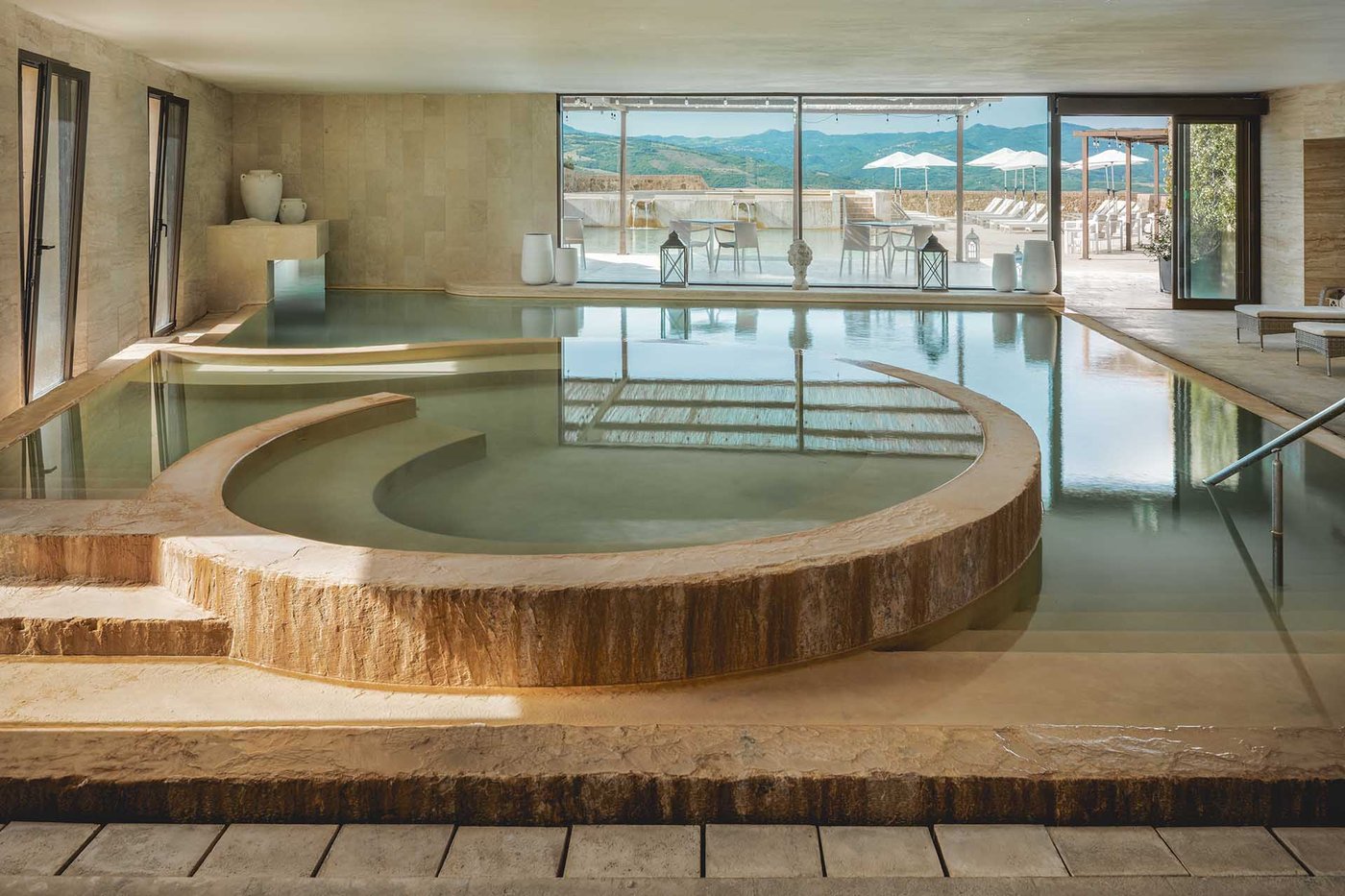
More than 1,500 square metres clad in Tuscan travertine, OLISPA brings the spring into four connected pools, indoors and out, so you can swim from the warmth of the interior to the open view of the valley without ever leaving the water. Around them: a panoramic sauna, two steam rooms, sensory showers, an ice fountain and a relaxation area.
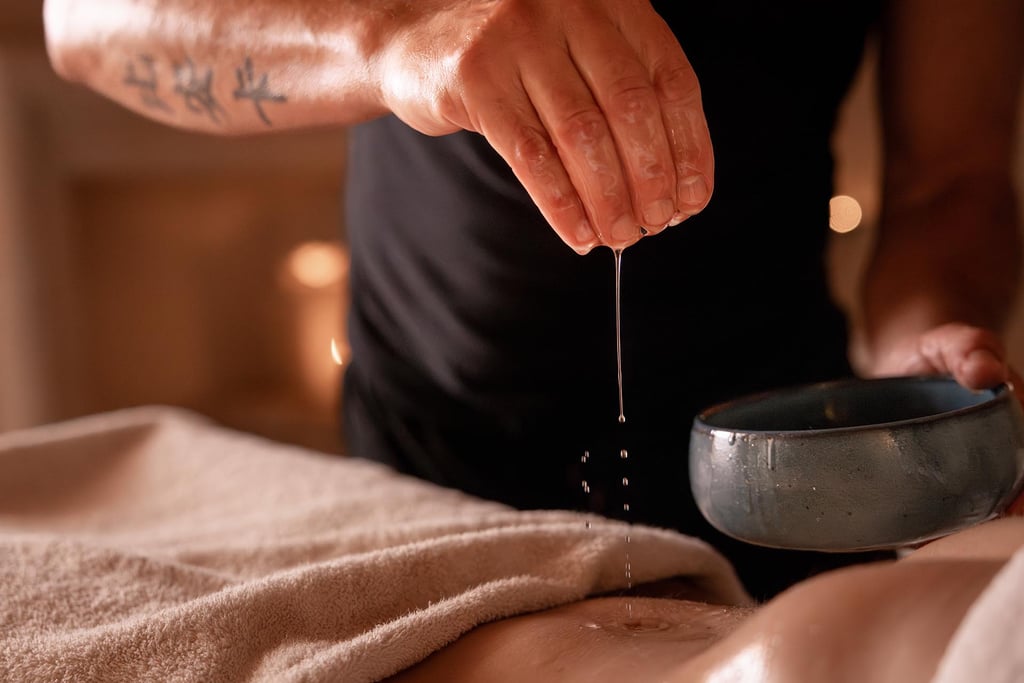
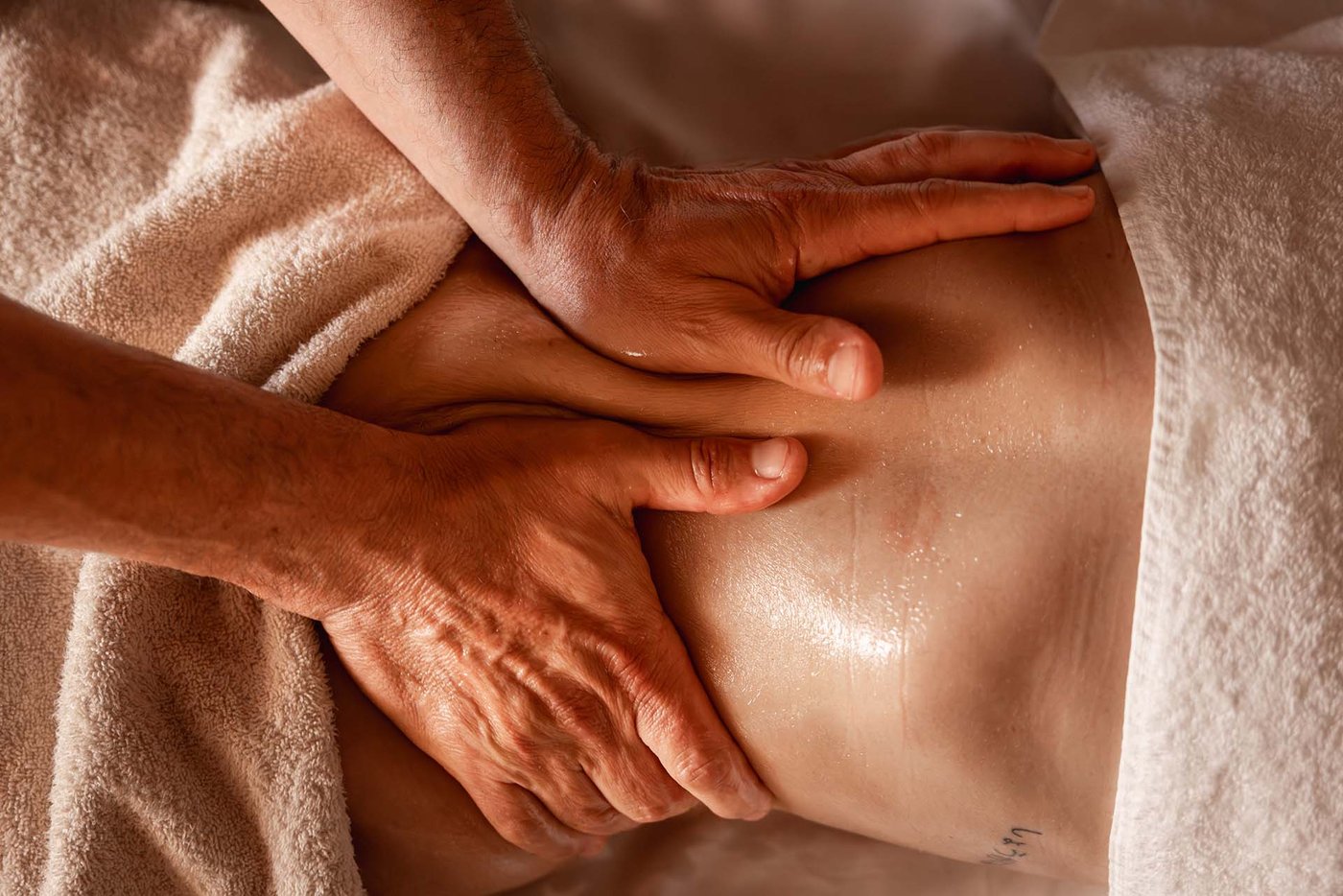
The rituals are inspired by the land, from the Brunello Ritual made with Montalcino wine to a signature treatment created with LAJATICA by Andrea Bocelli. For couples there is a double treatment room and, after sunset, private evening access to the spa, with soft lighting and a glass of sparkling wine.
A thousand years of healing water
Legend tells of a princess who, fleeing King Totila, turned herself into a spring rather than be taken. Whatever its origins, the story holds something true: for a thousand years, people have climbed this hill to bathe and to feel well.
Access to OLISPA and the thermal pools is included in every stay at Castello di Velona – Terme di Montalcino. Whenever you are ready, the water is waiting. At 36 degrees, as always.
Discover OLISPA · Check availability
Sources: Proksch E. et al., “Bathing in a magnesium-rich Dead Sea salt solution improves skin barrier function, enhances skin hydration, and reduces inflammation in atopic dry skin”, International Journal of Dermatology, 2005 (doi). Antonelli M., Donelli D., “Effects of balneotherapy and spa therapy on levels of cortisol as a stress biomarker: a systematic review”, International Journal of Biometeorology, 2018 (doi). Castelli L. et al., “Sleep and spa therapies: what is the role of balneotherapy associated with exercise? A systematic review”, Frontiers in Physiology, 2022 (doi). This article is for information only and does not replace medical advice.